
Professional Installation
Convenient Service
Trailer Hitches
Bike Racks
Running Boards
Roof Rails

Nissan Rogue (2021–Present) Flat-4 Wiring Installation
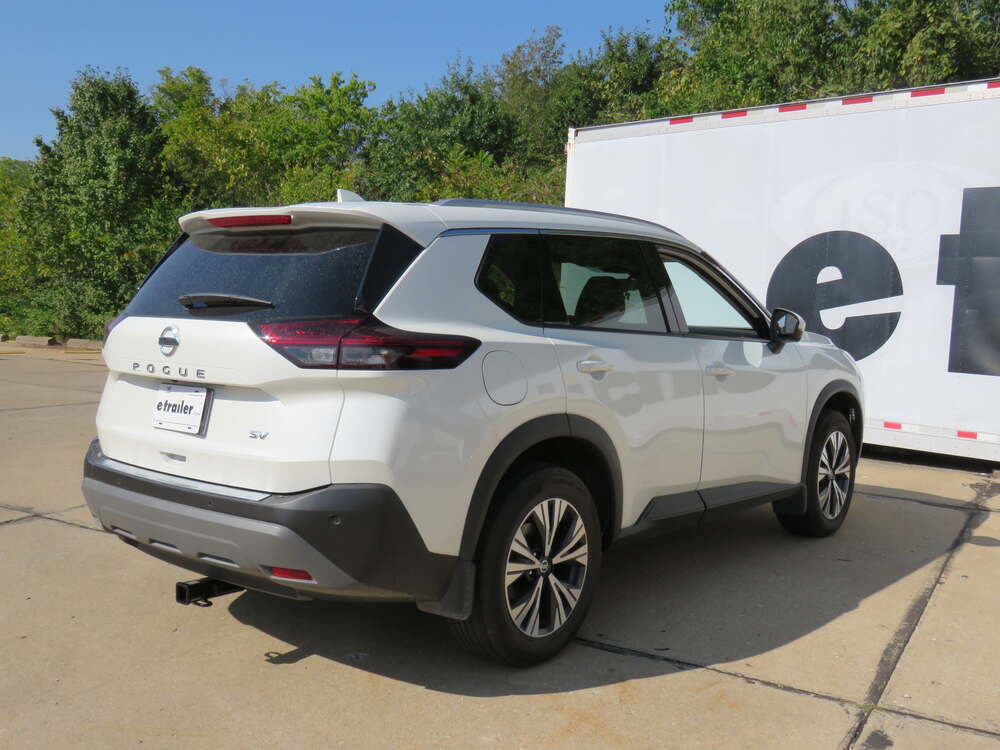
Vehicle Coverage: 2021–Present Nissan Rogue; exact trim and tow-package fitment are verified before scheduling
Output: 4-way flat trailer-light connector
Connection Method: Vehicle-specific plug-in connections; no factory lamp wires cut
Finished Connector Location: Mounted outside the vehicle at the hitch after routing the harness behind the rear bumper.
Installation Time: Typically 2–3 hours
Connector Location: Mounted outside the vehicle at the hitch after routing the harness behind the rear bumper.
The current Rogue uses a powered exact-fit harness connected behind both taillights. The converter and flat-4 are routed outside behind the bumper, with a dedicated fused power lead to the battery.
1. Disconnecting Power and Removing Both Taillights
The negative battery terminal is isolated before the rear lamp fasteners are removed and both taillights are released without damaging their alignment tabs.
2. Fish-Wiring the Driver-Side Connection
The driver-side branch is guided between the body and bumper, then plugged inline at the original lamp connector.
3. Crossing Behind the Bumper
The passenger branch is secured across the rear structure, pulled into the passenger taillight cavity, and connected without cutting factory wiring.
4. Securing the Exterior Converter and Ground
The module is mounted behind the bumper where it is shielded from direct road spray, and the ground is attached to clean structural metal.
5. Routing Fuse-Protected Battery Power
A dedicated power lead is carried forward along a protected chassis route, away from exhaust heat, suspension movement, and sharp edges.
6. Finishing and Testing the Exterior Flat-4
The connector is secured near the hitch and every trailer-light function is tested before the taillights and battery connection are restored.
Why Location Matters: The connector is finished where the vehicle-specific harness is designed to keep it protected, accessible, and clear of exhaust heat or moving components.